Is It Okay to Want to Be Great?
As a sophomore in college, I remember having the opportunity to eat dinner with a wise man. This man was a teacher who taught only one class at the college: biblical hermeneutics. Although he only taught one class on campus, he also taught full-time at a local high school. In other words, he had devoted his life to teaching. He spent his days helping young people learn how to think, how to read, how to understand the Bible, and how to live the Christian life.
One day, I saw him eating by himself in the school cafeteria, so my friend and I went over to join him. I remember trying hard to think of some impressive question to ask. After all, here was a man who seemed to possess the kind of wisdom you only get from years of walking with the Lord. Surely, I should ask him something profound.
But the only question I could come up with was one I had apparently been thinking about for some time.
“Prof, do you think it is okay to want to be great?”
Looking back, I can see that the question came out of my own understanding of success. To me, greatness was a public display of accomplishment. Greatness meant being recognized, respected, and admired. I wanted to be great because I thought that the greater you were in the public eye, the more glory you could give to God.
But the answer he gave me was significantly different than what I expected, and I have remembered it ever since.
“Sure it’s okay,” he said, “as long as it’s actually true greatness you’re talking about.”
He then went on to explain what true greatness looks like in God’s plan. True greatness is not necessarily standing before thousands of people and being held up as a model of success. It is not measured by applause, influence, platform, book sales, invitations, titles, degrees, or recognition. True greatness often comes from the least expected places.
True greatness is seen in the elderly widow who faithfully prays every day for her grandchildren to come to know Christ. True greatness is found in the childless couple who take time out of their lives to visit children who have no parents. True greatness is present in the young man or woman who, despite suffering in incredible ways, is always found serving in anonymous ways. True greatness may be hidden in the faithful mother who no one sees, the quiet church member who shows up early and leaves late, the pastor who labors for decades without fame, or the believer who forgives when no one else even knows the offense took place.
Those people define what it means to be truly great—not because the world recognizes them, but because God does. And that is the point. People cannot finally evaluate true greatness. Only God can. Paul reminds us that when the Lord comes, He “will both bring to light the things hidden in the darkness and disclose the motives of men’s hearts; and then each man’s praise will come to him from God” (1 Cor 4:5). It is faithfulness to Him that marks someone as truly great.
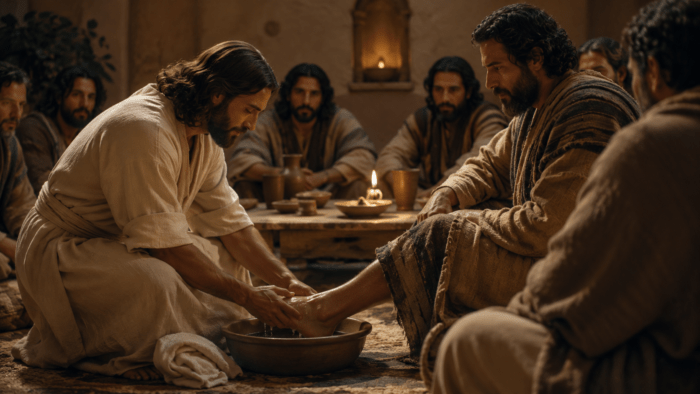
Of course, one of the go-to texts on greatness in the Christian life is Luke 22:24–27. The scene is almost shocking. The disciples are arguing about which of them should be regarded as the greatest. And according to John 13, this takes place in the same general context in which Jesus washes the disciples’ feet. In other words, while Jesus is embodying humble service, the disciples are debating personal status.
Luke writes:
And there arose also a dispute among them as to which one of them was regarded to be greatest. And He said to them, “The kings of the Gentiles lord it over them; and those who have authority over them are called ‘Benefactors.’ But it is not this way with you, but the one who is the greatest among you must become like the youngest, and the leader like the servant. For who is greater, the one who reclines at the table or the one who serves? Is it not the one who reclines at the table? But I am among you as the one who serves.”
—Luke 22:24–27
Jesus does not rebuke them merely for wanting greatness. Instead, He redefines greatness. The world thinks greatness is the ability to command, control, and be served by others. Jesus says that greatness in His kingdom looks exactly the opposite. “The one who is the greatest among you must become like the youngest, and the leader like the servant.”
In other words, in the Christian life, the greatest among you is the servant.
That is a hard lesson to learn because our flesh loves visible greatness. We want the kind of greatness people notice. We want the kind that gets thanked, applauded, promoted, or praised. But Jesus teaches us that the greatest acts of service are often the ones no one sees. The kingdom of God is not built merely through the people who stand on platforms, but also through the faithful servants who pray, give, encourage, disciple, forgive, clean, serve, visit, and labor quietly for Christ.
I have pondered that simple answer many times over the years. “Sure it’s okay, as long as it’s actually true greatness you’re talking about.”
There is profound wisdom in that distinction. It is not wrong to want to be great, if by greatness we mean faithfulness before God. It is not wrong to desire a life that matters, if by “matters” we mean a life spent in service to Christ and others. But we must let Jesus define greatness for us.
True greatness is not found in public display before man, but in private faithfulness before Christ. And on the last day, many who seemed great in this life may be forgotten, while many who were forgotten in this life will be shown to have been great all along.

Peter Goeman
Peter serves at Shepherd's Theological Seminary in Cary, NC as the professor of Old Testament and Biblical Languages. He loves studying the Bible and helping others understand it. He also runs The Bible Sojourner podcast and Youtube channel.