How Can God be Loving, Yet Allow Evil?
Is it possible that a loving God would allow evil? This is a perennial question for both believers and unbelievers. Think about the evil we see all around the world. Rape, murder, death, accidents, suffering—all evidence of evil. If God is in complete control (i.e., sovereign), how can we justify His love when He allows such evil?
This is a common argument brought forward by unbelievers, and it is something believers need to think about from an apologetic standpoint. However, perhaps even more important, this is also a question that believers ask in the midst of their own personal suffering and experience with evil. How should believers think about the love and power of God?
There are three things to remember that help us reconcile this apparent problem of evil, as well as provide a proper answer to an unbeliever.
1. God defines love, love does not define God
This is crucial. We do not have the authority to define love independently. I remember reading a good illustration of this issue from Adam Ford, years ago. I’m not sure where he posted it, but I had saved it in my files. It goes like this:
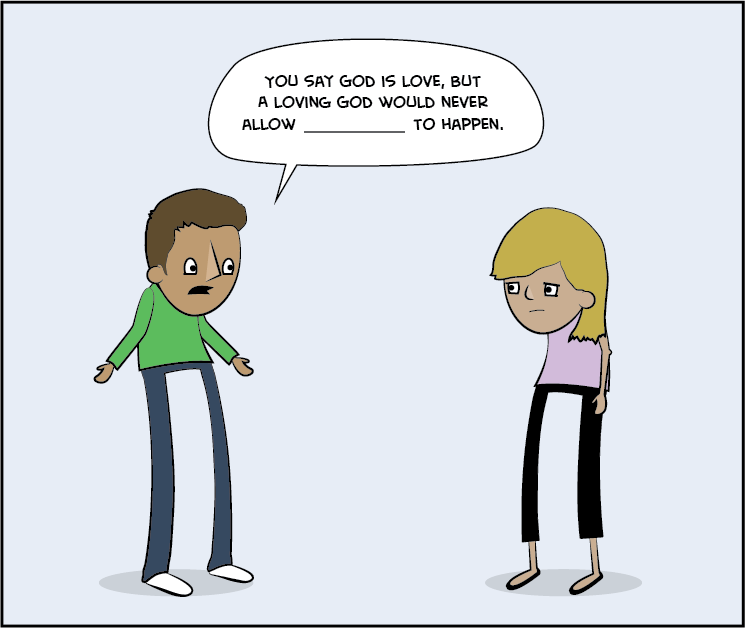

The point is: we must not let the culture’s version of love form who our God is. The Bible not only reveals God, but it also defines who God is and how real love operates. The Bible gives the true definition of love; the culture does not. For someone to argue God is not loving presupposes a definition of love that is usually not accurate.
2. God’s love is not equal
Praise the Lord for this! Sometimes we assume that God wants the best for everyone, but that is simply not true. The premier object of God’s love is Jesus Christ (cf. John 5:20-23). God displays this by giving the Son judgment over all creation and a worldwide kingdom. God does not want the best for everyone, He only wants the best for His Son. The entire plan of God is designed to ensure that His Son gets the best.
As Christians, it is because of our special relationship with the Son that we will inherit an eternal possession. Unbelievers, on the other hand, are punished because they reject the Son. God’s love is not equal for everyone. The Son is the supreme object of God’s affection, and believers have a special place with God because of their union with His Son.
3. In a world without God, there is no evil
When someone says that God cannot exist because of evil present in the world, they are falling into a trap of their own making. Without God there cannot be evil (at least within a consistent definition). Without a Creator, there are no rules by which the world must operate; therefore, there is no right or wrong.
Many people will argue that evil is a matter of cultural consensus. The problem with that is that there are plenty of historical examples where the cultural consensus led to a tremendous evil being committed. A case in point is the Holocaust. It was evil for the German Nazis to be convinced of Aryan supremacy and to exterminate the Jews on the basis of racial supremacy. Yet, it was a culturally appropriate and a popular action for that time. Majority rule is not a proper standard of right and wrong. It never can be.
The moral natures of good and evil can only be properly distinguished when we have a standard by which to measure those terms. That standard is found in God Himself. The revelation of His character forms that basis.
The Real Issue is not Love or Evil
Ultimately, an unbeliever who claims unbelief because of the presence of evil is simply suppressing the truth about God (Rom 1:18-23). It is often appropriate to give such unbelievers an answer, but they also need to be shown (lovingly) that they are sinning against their Creator and that they need to repent from their sin. They have already said they believe there is evil in the world. They need to be told (and shown from the Bible) that they are a part of the evil in the world. There is no perfect formula for doing this. We must pray for the Spirit to give us wisdom as we are faced with witnessing opportunities like this.

Peter Goeman
Peter serves at Shepherd's Theological Seminary in Cary, NC as the professor of Old Testament and Biblical Languages. He loves studying the Bible and helping others understand it. He also runs The Bible Sojourner podcast and Youtube channel.
One Comment
Dan Scott
Dear Brother Peter,
I’m not sure you answered the question. I believe the Bible teaches that free will is the cause of evil. Unfortunately, folks make bad decisions and those bad decisions always effect others. From Eve to David to Ananias, bad choices were the cause of all sorts of evil. Just because someone is a believer it does not relieve him of the responsibility. The Holy Spirit did not make us robots. Once the Lord gave his creation free will it was never recinded.
Thanks for having the ability to comment.