A Short Explanation of Samuel’s Levitical Heritage and Hannah’s Vow
How is it that Samuel was able to work in the Tabernacle? Wasn’t the Tabernacle work reserved for Levites? Samuel was born in Ephraim, so wouldn’t that disqualify him from service? These are some significant questions that readers of 1 Samuel often think about.
The book of 1 Samuel opens up by talking about “a certain man of Rammathaim-zophim of the hill country of Ephraim whose name was Elkanah” (1 Sam 1:1). Elkanah is married to two wives, one of whom is Hannah. Although barren, Hannah prays for a child, and the Lord answers her prayer. This child is Samuel!
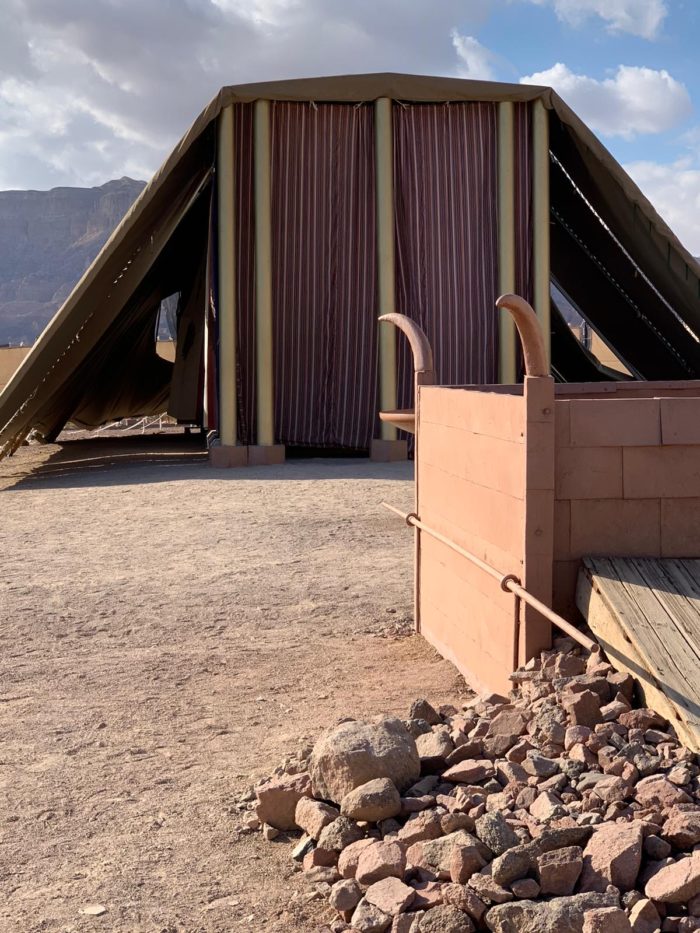
After giving birth, Hannah names her son Samuel, and dedicates him to tabernacle service with Eli (1 Sam 1:28). Samuel stays with Eli and serves the Lord (cf. 1 Sam 2:11, 18). Throughout the story, it is obvious that Samuel is ministering in the tabernacle (cf. 1 Sam 3:3).
This could be a problem. According to Numbers 4, only the Levites have the privilege of serving in the tabernacle. Specifically, the sons of Kohath were tasked with doing the work in the tabernacle (Num 4:2-4). Numbers 18 also seems pretty clear that non-Levites were not allowed in the service of the tabernacle. In fact, Numbers 18:7 says “any outsider who comes near shall be put to death.” How is it that Samuel has the opportunity to work in the tabernacle with Eli the priest, though he is apparently from Ephraim and a descendant of Elkanah (1 Sam 1:1)?
Tracing the Lineage of Samuel
As always, paying attention to detail is important and helps us think through the issue. The tribe of Levi had no land of their own, so they were allotted cities out of the other tribes. We find in Joshua 21:20, that the Kohathite clan of the Levites was given cities from the land belonging to Ephraim (cf. Josh 21:5). Later in Joshua 24:33 we read that Phinehas himself (Aaron’s grandson) dwelled in the hill country of Ephraim.
By knowing Israel’s history, and the tribal allotments, it is no surprise that Samuel’s heritage is traceable to the Levites after all. In fact, according to Joshua 21, he is likely related to the Kohathites specifically. Furthermore, this theory is backed up by 1 Chronicles 6:28 which tells us that Samuel was from the line of Levi (cf. Psalm 99:6).
All in all, the Bible’s details match up precisely with what we would expect. Samuel was not some rogue servant in the tabernacle. He belonged there as a Levite. And God would use him in many great ways in the days ahead.
The Intelligence of Hannah’s Vow
When we understand these details, we are sensitive to Hannah’s knowledge of God’s plan for Israel. Hannah didn’t just dedicate Samuel to tabernacle service on a whim. She was not compelled by personal desire alone. Rather, it seems she understood what Samuel could do best in God’s plan given his family lineage. She understood that she could dedicate Samuel to God in service of the Tabernacle. She was not only driven by emotions, but she intelligently understood what role her son could play in service of the God of Israel.

Peter Goeman
Peter serves at Shepherd's Theological Seminary in Cary, NC as the professor of Old Testament and Biblical Languages. He loves studying the Bible and helping others understand it. He also runs The Bible Sojourner podcast and Youtube channel.
One Comment
Brian Overholtzer
Thank you Dr. Goeman. Hannah’s story is a beautiful way to start out 1-2 Samuel. On top of the Levitical heritage of Elkannah’s family, Hannah was also emersed in the Torah. In verse 11 she uses three key terms when asking God for a son that all relate back to God’s covenant with Abraham, Issac, and Jacob- “remember,” “do not forget,” and “give me a seed.” Hannah’s prayer is grounded in the Abrahamic covenant. When God answered her prayer in verses 19-20, He was ultimately remembering His promise to the patriarchs. What an amazing way to start out 1-2 Samuel. Then she alludes to Num 24:7 at the end of her prayer in 1 Sam 2:10 when prays for the future messianic king of Israel!