A Fascinating History of the Failure of Prisons
Being a Christian, I’m always interested in cultural issues. One of the most controversial cultural conversations centers on prisons and whether the United States’ system of incarceration is a good system. I first started thinking about this issue in earnest when, a few years ago, I was listening to Al Mohler, and he noted New York’s 2019 plan to spend $9 billion on building new prisons. Mohler included a brief discussion of the history of prisons, which inspired me to do a little more research on the issue. This brief article is a summation of the history of prisons and how we ought to think about them as Christians.
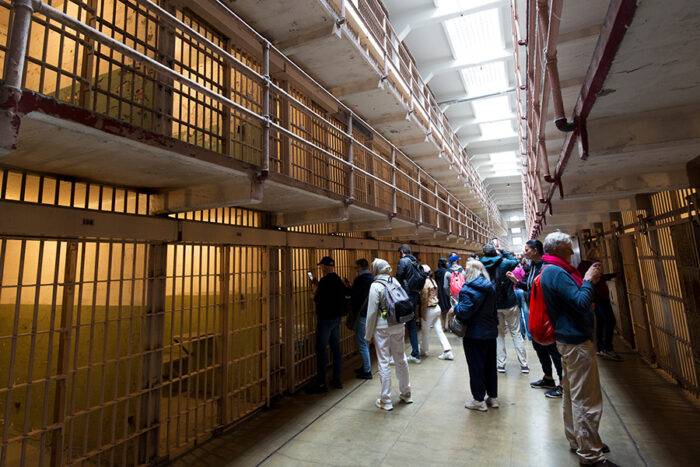
Throughout most of human history,
prisons were meant to be a temporary arrangement.
Prisons in the ancient world were places where suspects were held while waiting for their cases to be heard. For example, Leviticus 24:10-12 mentions the imprisonment of an individual until the verdict had been reached, and the judgment was then administered (cf. Num 15:32-36). Similarly, in ancient Mesopotamian practice, a suspect was often held in the temple until his trial.
This pattern is continued in the New Testament era where prisoners were either held until their case was clarified (Acts 5:17-25; 16:23-24), or debtors were kept while they or their family paid off the debt (Matt 18:28-30; Luke 12:58-59).
The modern manifestation of prisons
arrived in the 19th century.
The rise of modern prisons is largely attributed to Jeremy Bentham (1741–1832). Bentham was responsible for pushing the idea of a prison as a panopticon (i.e., a prison where guards would have constant surveillance on the inmates). This alternative form of punishment was promoted during this time as a more humane option.
It was during this time that state-owned prisons began to operate. One of the first of these (in the United States) was the Eastern State Penitentiary. Located in Philadelphia, the prison regulations required separate confinement as a form of rehabilitation. As part of the process, the warden was required to visit each inmate every day.
The failed purpose of modern
prisons was to rehabilitate.
As noted by the example above, many prisons were called penitentiaries. The word penitentiary comes from the Latin paenitentia, which means repentance. As the name indicates, the purpose of these modern prisons (aka penitentiaries), was to facilitate repentance and character reform. This is also why some prisons are referred to as “correctional facilities.”
For the Christian, it will come as no surprise that modern prisons have largely failed at rehabilitation. For Jeremy Bentham, the ultimate explanation for human actions was either pain or pleasure. Thus, the theory emerged that it was possible to facilitate rehabilitation in the right environment. In contrast, the Christian understands that natural man is bent on sinning and the promise of pain or pleasure cannot change the heart which is set in sin (cf. Jer 17:9; Rom 3:10-12; Gal 5:17).
It is only through the power of the Gospel of Jesus Christ that genuine character transformation can occur. Mankind is not inherently good nor even neutral. Thus, mankind is powerless on its own to resist the temptations and enticements that sin has to offer. It is only through submission to Christ and the regeneration that takes place in salvation that one can say, “I was something wicked, but now I am washed” (cf. 1 Cor 6:9-11).
It is interesting, isn’t it, that something like the history of prisons can be a window into one’s theology? Whereas many secularists would champion the idea of prisons for character reform, a Christian needs to think outside of the cultural box and look at this from a biblical perspective. The promise of character correction is an impossibility, since a prison can never change the heart. The ultimate character reformation can only come through Jesus Christ and His act of grace in the hearts of mankind.
Photo Credit: Envato Elements

Peter Goeman
Peter serves at Shepherd's Theological Seminary in Cary, NC as the professor of Old Testament and Biblical Languages. He loves studying the Bible and helping others understand it. He also runs The Bible Sojourner podcast and Youtube channel.