The Prince of Preachers on the Usefulness of Textual Criticism
When Charles Spurgeon is mentioned, he is almost always celebrated as the Prince of Preachers—a communicator of extraordinary clarity, force, and eloquence. And rightly so. Spurgeon was a masterful expositor who loved the Lord and proclaimed the Scriptures with bold conviction. His life and ministry remain a towering model of Christian devotion, both for believers in general and preachers in particular.
Yet one dimension of Spurgeon’s preaching is often overlooked: his careful attention to the textual issues of the Bible in its original languages. Throughout his sermons and writings, Spurgeon demonstrated an awareness that not every manuscript reading or translation was equally certain. He was deeply committed to ensuring that what he proclaimed from the pulpit was the genuine Word of God. In practice, this meant that Spurgeon regularly and thoughtfully engaged in textual criticism (textual criticism is the scholarly process of comparing manuscripts to determine the most accurate original wording of a text).
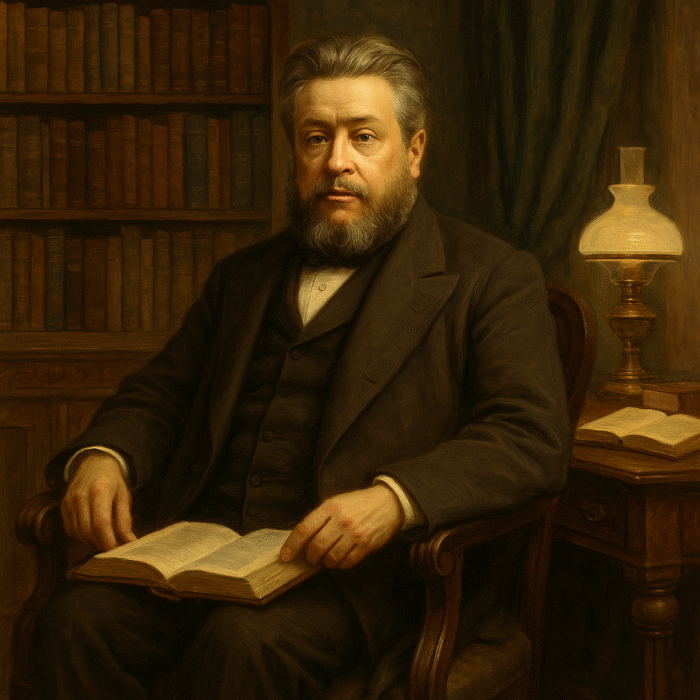
Although Spurgeon preferred using the Authorized Version (KJV), he was not bound to it. Read what Spurgeon says:
Do not needlessly amend our authorized version. It is faulty in many places, but still it is a grand work taking it for all in all, and it is unwise to be making every old lady distrust the only Bible she can get at, or what is more likely, mistrust you for falling out with her cherished treasure. Correct where correction must be for truth’s sake, but never for the vainglorious display of your critical ability.
Notice that Spurgeon was adamantly against any attempt to talk about textual criticism for the purpose of self-promotion. However, Spurgeon admitted that the English version his congregation used (AV) was not perfect, and in cases where a correction was needed, he was willing to note it, “For truth’s sake.”
Although Spurgeon lacked formal training in textual criticism, he was a critical thinker on such issues and recognized the importance. Spurgeon often demonstrated that he was aware of theologically motivated changes introduced into some Greek manuscripts by later copyists. And although his goal was never to impress his congregation with his knowledge, he desired to ensure that they received the truth—a noble goal for any teacher.
Thinking through Spurgeon’s view of textual criticism is a good reminder to preachers and serious students of God’s Word. First, preachers should help grow their congregations to be able to think maturely about issues of textual differences in manuscripts. Second, preachers should be able to evaluate different readings and discuss them with understanding. It is a work that must be done (even if we are imperfect at it). Oftentimes, commentaries are quite helpful in working through different variants.
Spurgeon’s example is a great reminder that textual criticism is not some esoteric discipline. Rather, there are extremely practical ramifications of its practice, and it ought not to be neglected. What is at stake is God’s Word—and that is worth the extra work to ensure we are reading it properly.
For those interested in braving the topic of of the New Testament and understanding its writing and transmission (including an introduction to Textual Criticism), you might enjoy this seven part series I recorded with Denis Salgado.
For more on Charles Spurgeon and his use of textual criticism, see this excellent article by Elijah Hixson.

Peter Goeman
Peter serves at Shepherd's Theological Seminary in Cary, NC as the professor of Old Testament and Biblical Languages. He loves studying the Bible and helping others understand it. He also runs The Bible Sojourner podcast and Youtube channel.
2 Comments
Ryan
Elijah Hixson link doesn’t work for me. Do you have the title of the article?
Thanks!
Peter Goeman
https://etsjets.org/wp-content/uploads/2014/09/files_JETS-PDFs_57_57-3_JETS_57-3_555-70_Hixson.pdf — Apparently they updated their links.